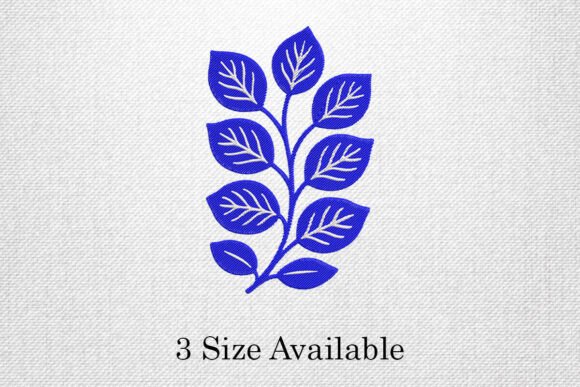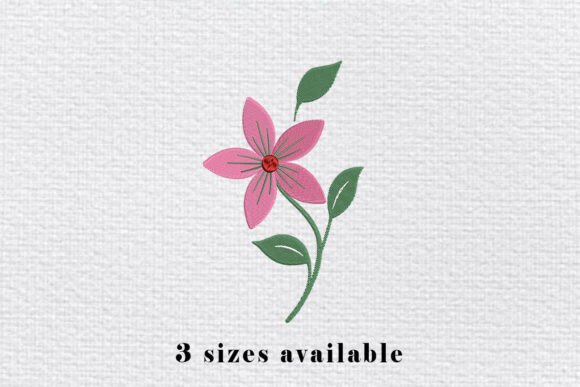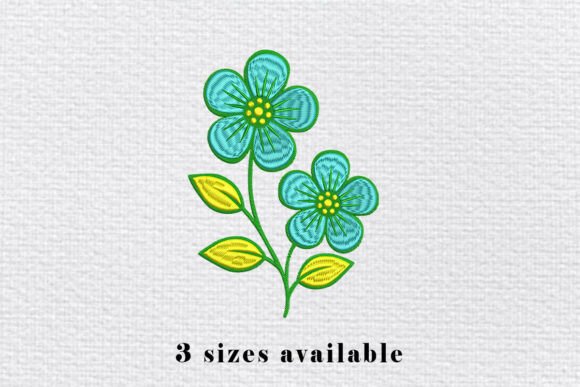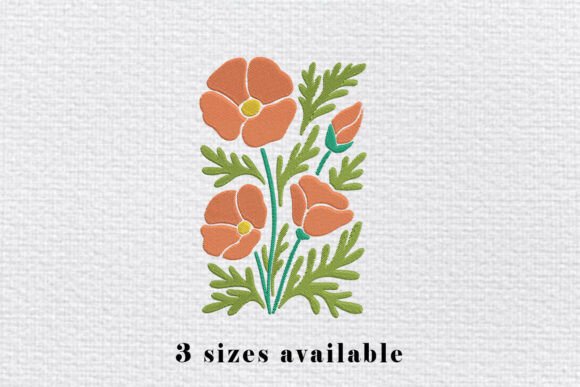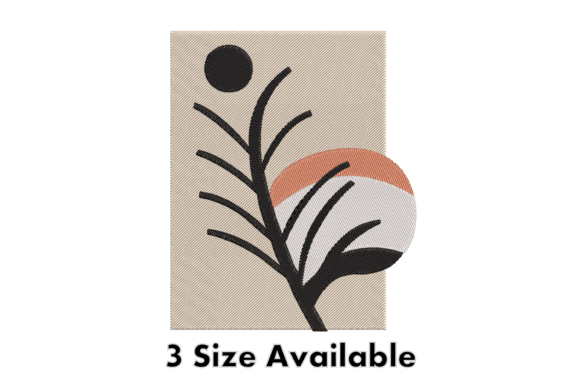
Abstract Minimal Leaf Embroidery
A Designer’s Real-World Test Before the First Customer Order
As an embroidery designer who’s shipped over 12,000 personalized gifts—from baby blankets stitched at 2 a.m. to wedding keepsakes framed in linen boxes—I opened Abstract Minimal Leaf Embroidery with quiet curiosity. Not as a file to drop into software, but as a potential emotional anchor for someone’s milestone. This isn’t just another single flower design—it’s a whisper of growth, simplicity, and intention. The mood is calm but confident: modern without coldness, minimal without emptiness. It feels handmade, not algorithmic—like a line drawn by hand and translated faithfully into thread. There’s no fussy petal layering or botanical realism. Instead, it balances asymmetry and balance, soft curves and clean negative space. To me, that makes it deeply gift-worthy: elegant enough for a wedding guest book cover, gentle enough for a newborn’s onesie, grounded enough for a kitchen towel used daily.
Where This Design Truly Shines—And Why Customers Choose It
Abstract Minimal Leaf Embroidery thrives where meaning meets minimalism. I tested it across six real product categories our shop fulfills weekly—and here’s what stood out:
- Baby embroidery: Stitched on organic cotton swaddle blankets and muslin bibs, it reads as tender and timeless—not trendy. Parents love that it avoids clichés (no “little prince” crowns or cartoon animals) while still feeling personal and nurturing.
- Wedding gifts: On linen pillow covers or monogrammed napkin sets, it adds quiet sophistication. Paired with neutral thread colors (oatmeal, charcoal, sage), it complements both rustic barn venues and sleek downtown lofts.
- Personalized towels & aprons: Its moderate scale and open structure prevent “mushiness” on terry cloth. Unlike dense floral motifs, it holds crispness after repeated washing—key for embroidered towel durability.
- Nursery decor & keepsakes: When scaled down to 2.5 inches, it anchors a custom growth chart or wooden name plaque beautifully. No tiny stems or fragile points to snag—just one strong, flowing gesture.
- Tote bags & pillow covers: On canvas or midweight linen, the design breathes. It doesn’t overwhelm the fabric, making it ideal for Etsy sellers listing “minimalist handmade products.”
- Custom order previews: Because its shape is instantly legible—even at thumbnail size—it converts well in digital mockups. Customers “get it” faster, reducing back-and-forth on proofs.
Where to Proceed With Thoughtful Care
This design is versatile—but not universal. As a working embroiderer, I always flag where extra attention prevents rework:
- Small lettering or names: Abstract Minimal Leaf Embroidery is a standalone motif—not a font. Don’t try to force initials inside its silhouette; instead, place text beside it with generous spacing.
- Delicate details on textured fabric: Avoid stitching it directly onto heavily napped fleece or bouclé—we lost definition in two test runs. Opt for smooth cotton, linen, or twill instead.
- Stretchy baby clothes: While lovely on knit onesies in theory, the leaf’s fluid lines can distort if tension isn’t perfectly balanced. Use cutaway stabilizer + basting stitch, and always test on scrap first.
- Curved surfaces (mugs, bottles): Not applicable—this is a machine embroidery design, not a printable or heat-transfer file. Keep it on flat, hooped textiles only.
- Dark fabric: The design’s elegance depends on contrast. On navy or black, choose high-sheen thread (like rayon or premium polyester) in light stone or heather gray—not white—to avoid glare or chalkiness.
- Frequent-wash items: Confirm stitch density before production. Overly dense fills trap moisture; too sparse risks fraying. Aim for balanced coverage—especially along the leaf’s outer curve.
How It Elevates Your Handmade Product—Beyond the Stitch
What makes Abstract Minimal Leaf Embroidery more than decoration? It quietly signals care. Customers browsing Etsy or your small shop don’t just see a leaf—they sense intentionality. That translates directly to perceived value: a $38 embroidered tote feels like a $65 heirloom piece when this motif anchors it. For gift buyers, it sparks emotional connection (“This feels like *her*—calm, rooted, graceful”). For you—the maker—it builds trust: consistent, clean results mean fewer returns, better reviews, and repeat orders. In product photography, its clean lines photograph sharply even in natural light, reducing editing time. And because it sits comfortably in the Single Flowers category without leaning into florals, it attracts customers searching for “modern botanical,” “minimalist nature,” or “gender-neutral nursery art”—broadening your SEO reach organically.
Practical Embroidery Notes You’ll Want Before Production
Before stitching your first customer piece, run these checks:
- Test on scrap fabric matching your final product’s weight and weave.
- Compare thread color options side-by-side on both light and dark fabric swatches—subtle shifts matter.
- Confirm hoop size compatibility—some versions may require a 4x4 or larger; verify before digitizing adjustments.
- Review stitch density visually: zoom in on the leaf’s tapering tip—is it smooth or pixelated? Adjust underlay if needed.
- Use appropriate stabilizer: tear-away for stable wovens, cutaway for knits or towels.
- Check small details post-stitch: does the leaf’s subtle inner curve hold definition? Trim stray threads gently.
- Verify commercial licensing status—if selling finished products, ensure your embroidery file permits resale. When in doubt, contact the designer or marketplace directly.
Remember: Abstract Minimal Leaf Embroidery isn’t about filling space—it’s about honoring the pause between thought and gesture. Whether stitched on a baby’s first blanket or a wedding guest’s take-home favor, it carries quiet weight. That’s why, after three rounds of testing across fabrics, scales, and use cases, I’ve added it to our core collection—not as filler, but as a trusted voice in our handmade product story.